How India’s Recycling Infrastructure Is Quietly Becoming a Global Benchmark for Circular Manufacturing
September 7, 2026
How India’s Recycling Infrastructure Is Quietly Becoming a Global Benchmark for Circular Manufacturing
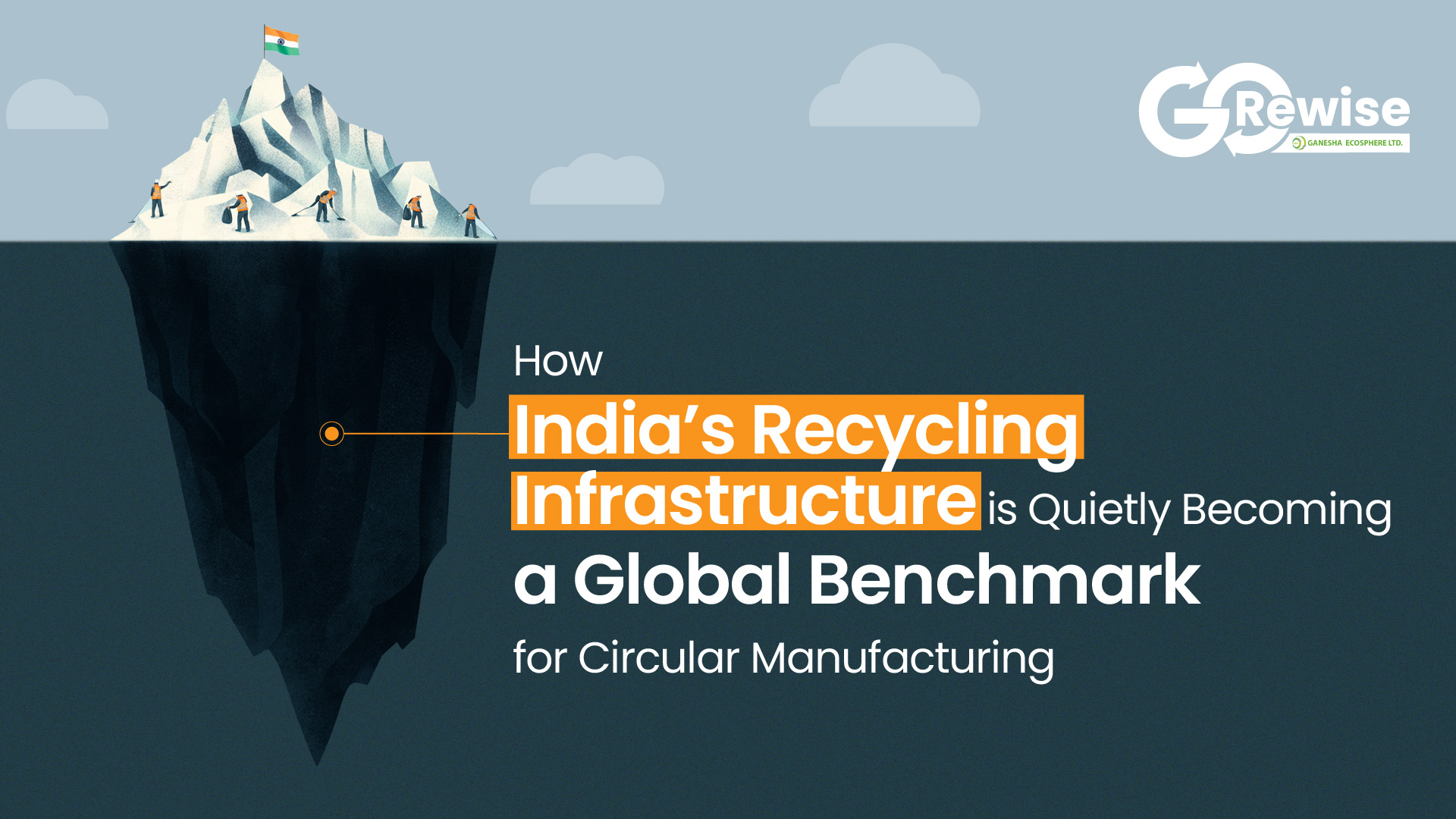
For years, global circular economy leadership was associated primarily with Europe, Japan, and parts of North America, while India, despite being one of the world’s largest plastic consumers, remained largely absent from these conversations. The country’s recycling ecosystem was long characterised by informal waste collection and manual segregation, with limited formal infrastructure and traceability, making it difficult to present consistent, verifiable recycling outcomes on the global stage.
That perception is now changing rapidly. India’s PET recycling sector currently recovers close to 92 percent of its annual bottle consumption, placing it ahead of Europe and the United States, where PET recycling rates remain below 50 percent. This performance is particularly striking given India’s scale, with annual PET consumption running into millions of tonnes.
What sets India apart is not only the volume recovered, but the structure of its recycling system. The country has adopted a Distributed Circular Economy Model, combining decentralised collection networks with increasingly sophisticated processing and recycling infrastructure. This hybrid approach is now being referenced as an emerging template for circular manufacturing in large, diverse markets, demonstrating how scale, efficiency, and traceability can coexist within a complex economy.
What is a Circular Economy Model?
The circular economy replaces the linear ‘take-make-waste’ model with a closed-loop system that minimises resource use.
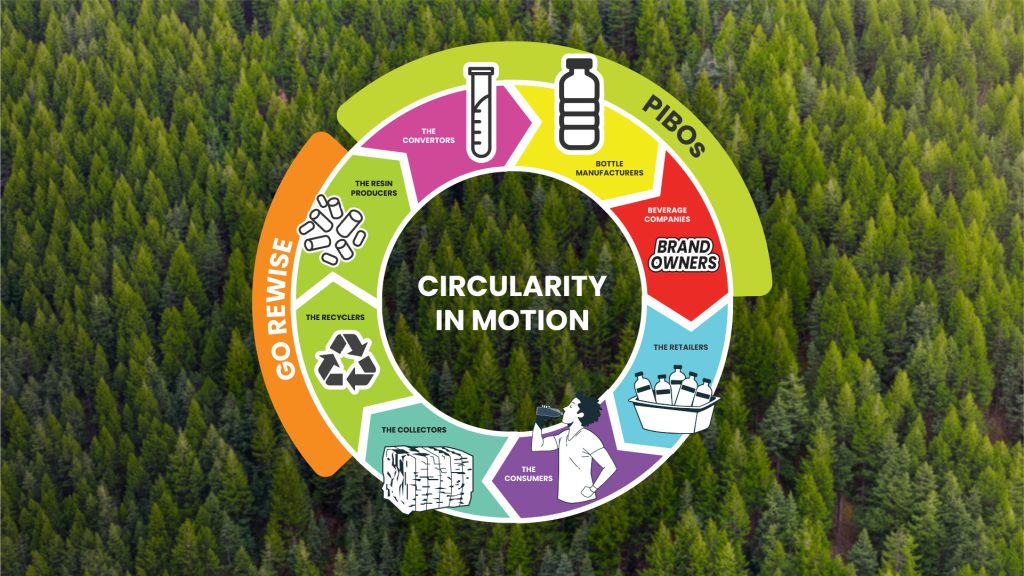
Raw materials produce plastic products for use, then get recycled back into raw materials in an endless loop. India’s rPET ecosystem has transformed from fragmented informal networks into sophisticated, tech-driven value chains.
Informal to Formal Shift
In the early 2000s, informal sorters and rag pickers handled most of the collection with minimal oversight or tracking. India remained stuck in this fragmented state due to absent regulations, no formal incentives for organised recycling, and a waste sector viewed as low-value labour rather than a strategic industry.
Change accelerated post-2016 with Plastic Waste Management Rules mandating EPR, unlocking INR 10,000 crore investments and tech adoption. By 2024-25, formalised networks achieve 92% recovery rates through digitally enabled coordination across hubs. Blockchain now traces bottles from source to output, while AI-powered sorting operates in advanced facilities, marking a complete overhaul in efficiency and reliability.
| Era | Collection Model | Capacity (million tonnes) |
| 2000s | Rag pickers | <0.5 |
| 2010-2020 | Semiformal clusters | 1.0 |
| 2024-2025 | Certified networks | 1.75 |
Mega-Plant Rise
India’s rPET story today rests on certified, distributed sourcing networks that link thousands of informal waste pickers, aggregators, and Material Recovery Facilities to food‑grade recyclers through traceable contracts and audits. Instead of relying on a few city‑centric suppliers, brands can draw from multi‑state feedstock pools that are quality‑checked, contamination‑controlled, and aligned with evolving EPR and food‑contact norms. This stitched‑together network turns what was once a fragmented PET stream into a reliable, spec‑driven raw material base for high‑performance rPET.
Running in parallel is the rise of mega‑capacity recycling plants designed to handle tens of thousands of tonnes a year, often combining hot‑wash, decontamination and solid‑state polycondensation under one roof. Facilities such as large bottle‑to‑bottle lines operating across multiple regions now supply food‑grade rPET for leading beverage brands, proving India can meet global performance and safety requirements at scale. Together, these mega‑plants and distributed sourcing networks create a hybrid model: wide, decentralised collection feeding a smaller number of technologically advanced hubs that can consistently deliver high‑quality, certified rPET to domestic and international markets.
India’s RPET Ecosystem
Technology has been the single largest enabler of quality and scalability in India’s rPET ecosystem.
-
-
- Super-clean decontamination has been critical for food-grade rPET production. Solid-state polycondensation (SSP) uses controlled heat and vacuum conditions to remove volatile contaminants to food-contact compliant levels, enabling bottle-to-bottle recycling.
-
-
-
- Digitisation strengthens system reliability through bale-level tracking, digital batch records, and automated quality checks. This reduces manual intervention and improves auditability across the value chain.
-
Compliance Frameworks
The Plastic Waste Management Rules, introduced in 2016 and strengthened through subsequent amendments, formalised Extended Producer Responsibility for plastic packaging. These regulations made producers directly accountable for post-consumer waste, moving recycling from an informal activity into a regulated and measurable obligation.
By 2024–25, EPR frameworks require brands to demonstrate verifiable recycling through registered recyclers and official reporting portals. Mandatory recycled content targets for rigid plastic packaging begin at 30 percent, with progressive increases planned over the coming years.
Regulatory clarity around material safety has further accelerated adoption. Specifications issued by the Bureau of Indian Standards for recycled PET, along with approvals from the Food Safety and Standards Authority of India for food-contact rPET, have strengthened confidence in domestically recycled material. Alignment with international evaluation frameworks used by regulators such as the USFDA and EFSA has supported broader global acceptance.
Rather than slowing growth, compliance has acted as a catalyst, driving investment, formalisation, and professionalisation across the recycling value chain. For business owners, this shift also brings complexity. Navigating EPR obligations, recycled content targets, documentation, and food-contact compliance requires specialised infrastructure and traceable systems. Go Rewise helps bridge this gap by offering certified, EPR-compliant recycling solutions with end-to-end traceability. Through integrated processing and regulatory alignment, we enable brands to meet compliance requirements while strengthening sustainability outcomes and reducing operational risk.
Why Brands Trust Indian rPET
Global brands increasingly view India as a strategic rPET sourcing base for three reasons: scale, consistency, and transparency.
India’s PET waste stream supports annual recycling volumes exceeding 1.6 million tonnes, offering supply stability that many regions struggle to achieve. In comparison, recycled PET availability in parts of Europe remains constrained by collection rates and fragmented infrastructure.
Quality consistency has also improved significantly. Advanced processing technologies now enable Indian recyclers to meet specifications comparable to international food-grade recycling benchmarks, making the material suitable for demanding packaging applications.
Transparency is the third differentiator. EPR-linked documentation, third-party audits, and digital traceability systems provide brands with the data needed for ESG reporting, Scope 3 disclosures, and regulatory filings. In a market increasingly sensitive to greenwashing, this verifiability is critical.
Go Rewise as a Case in Point
At Go Rewise, we demonstrate how India’s ecosystem-level progress in recycling can be translated into enterprise-scale execution.
- We operate a multi-plant model that processes large volumes of post-consumer PET while sourcing feedstock from diverse geographies.
- Our operations span the full recycling lifecycle, from organised collection and sorting to advanced washing, solid-state polycondensation decontamination, and resin extrusion.
- We work closely with brand sustainability and procurement teams to deliver customised rPET solutions across fibre, sheet, and food-grade applications.
- Our advanced processing capabilities support high intrinsic viscosity and low contaminant thresholds required for demanding food-contact packaging uses.
- Through certified EPR-compliant solutions, robust traceability systems, and alignment with global food-grade approvals, we enable our partners to integrate recycled content into products with confidence.
Recycling and materials innovation is increasingly concentrated in established industrial clusters such as Gujarat and Tamil Nadu, where plastics manufacturing, recycling infrastructure, and technology adoption intersect. These regions host several advanced recycling facilities that deploy globally recognised European processing technologies to improve sorting efficiency and material quality.
Takeaway
India’s recycling infrastructure has reached an inflection point. High recovery rates, growing processing capacity, regulatory clarity, and technological maturity have positioned the country as a credible benchmark for circular manufacturing.
For global brands, this presents a clear opportunity. Partnering with integrated recyclers enables access to reliable recycled supply, stronger compliance, and sustainability narratives grounded in real impact.
Go Rewise invites sustainability, procurement, and CSR teams to explore long-term circular partnerships that go beyond waste management. Together, we can build supply chains where materials retain value, responsibility is shared, and circularity becomes a competitive advantage.